Minimum rural retirement age
As a rule, 55 for women and 60 for men for rural retirement benefits based on age.
Brazilian social security law · Espírito Santo
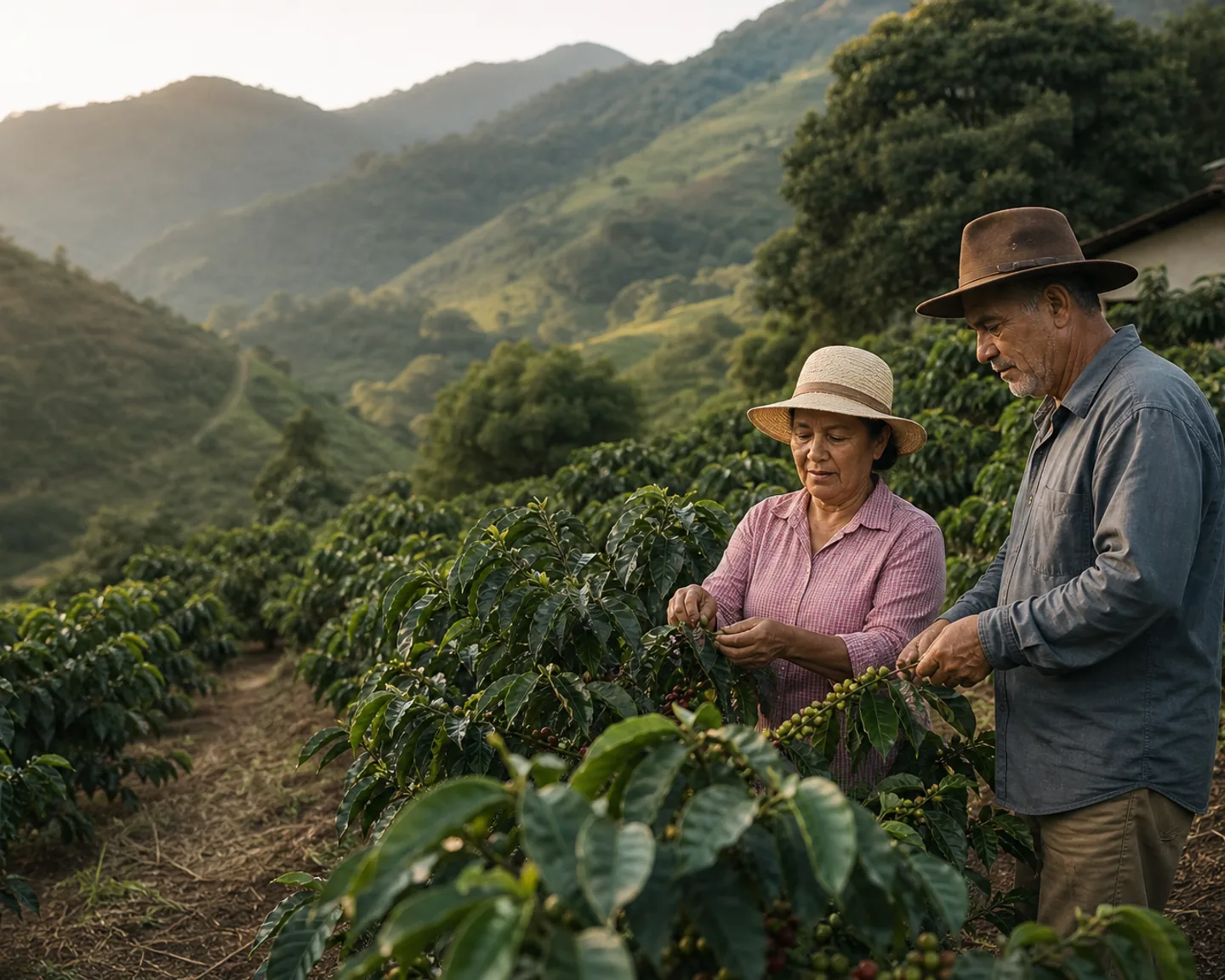
In coffee farming and other family activities, documents may be in a spouse's or another family member's name. The task is to reconstruct who worked, during which period and under which Brazilian social security category.
Informational content about Brazilian law. Classification and benefit entitlement depend on each person's category, periods and evidence.
55 years · women
Statutory rural retirement age, subject to proof of the required period
60 years · men
Statutory rural retirement age, subject to proof of the required period
Assistance in ES
OAB/ES nº 44.334 and online legal assistance
Key point
Invoices, contracts, records and occupational descriptions often do not name everyone who worked in the family group.
In Theme 327, the TNU held that documents in a spouse's or partner's name identifying them as a rural employee constitute initial documentary evidence for a segurado especial applying for a benefit. The ruling has specific conditions and does not make any family document automatic proof.
STJ Súmula 577 also allows recognition of rural work before the earliest document, provided convincing witness evidence is produced with an opportunity for the opposing party to challenge it. Dates, names, addresses, crops and family composition must therefore be assessed together.
In Espírito Santo, records relating to coffee farming, share farming, sales, unions, rural schools and healthcare may help, but each item's weight depends on the period and its actual connection with the work declared.
Who may need an assessment
The everyday name for the work does not replace checking the Brazilian social security category and how the work was performed.
General requirements
Rural retirement benefits based on age have their own criteria. A conclusion requires a work history timeline and a check of any urban periods or changes of category.
As a rule, 55 for women and 60 for men for rural retirement benefits based on age.
Generally, 180 months of rural work must be demonstrated, subject to the rules applicable to the date and category.
Segurados especiais, rural employees and occasional workers do not have identical evidence requirements or treatment. Classification comes before a conclusion.
Urban periods, absences from work, outside income and changes in the family group must be included in the timeline.
A timeline helps identify what can be used, what needs supplementing and which gaps require care.
Organising evidence
You do not need everything at the first contact. Each document's usefulness depends on the name, date, content and connection with rural work.
Certificates identifying rural work, employment record books, registers, files and dated public documents.
Producer invoices, invoice books, receipts, evidence of sales, agricultural registrations and cooperative documents.
Share farming, loan-for-use and lease agreements, possession documents, ITR, CCIR or equivalent records.
Documents in a spouse's or partner's name may be relevant where linked to the period and activity.
School enrolment, healthcare, association, union and other records indicating a rural address or occupation.
CNIS, application, self-declaration, requests for further information, interview and refusal decision, if any.
Transparency
Brazilian social security rules have exceptions and differences between categories. Responsible advice avoids automatic answers.
Legal assistance
The approach is determined by the Brazilian social security category, documents and periods presented.
Organising locations, crops, family members and any urban work periods.
Sorting by name, date, origin and ability to demonstrate rural work.
Assessing an application, response to a request for information, appeal or court action according to the case's stage.

Who will assist you
Lawyer with postgraduate specialisations in Brazilian social security law and Brazilian employment law and procedure, as well as education in law, accounting and economics.
Assistance combines Brazilian social security experience and document analysis. OAB/ES nº 44.334 permits professional practice in the state, with online assessment of periods, CNIS (Brazil's social information register) and rural evidence.
Responsible lawyer: Alex Rodrigues Alves
OAB/DF nº 46.260 | OAB/GO nº 64.591 | OAB/SP nº 508.634 | OAB/MG nº 230.667 | OAB/ES nº 44.334 | OAB/PR nº 136.193
Frequently asked questions
The answers are general. A conclusion depends on the documents and circumstances of the rural work.
It may, depending on its content and the family context. In Theme 327, the TNU recognised documents in a spouse's or partner's name identifying them as a rural employee as initial documentary evidence. Other situations require their own assessment and the evidence may need supplementing.
There is no automatic answer. Documentary evidence must be contemporaneous with part of the period and form a coherent body of evidence. STJ Súmula 577 allows recognition of time before the earliest document where convincing witness evidence has been produced with an opportunity for the opposing party to challenge it.
Not necessarily. TNU guidance is that one member's urban activity does not, by itself, disqualify the others as segurados especiais, the Brazilian special category of insured persons. The contribution of rural work to the household's subsistence must be assessed.
The crop alone does not determine entitlement. The Brazilian social security category, working arrangements, age, period and available evidence must be checked.
For rural retirement benefits based on age, these are the ages currently prescribed for those who prove rural work for the required period. Circumstances involving urban periods, contributions or other categories may require a different calculation.
No. The decision must be compared with the documents and reasons for refusal. Depending on the case, a fresh application, administrative appeal or court action may be appropriate, without any guarantee of success.
WhatsApp messages can be received in different languages. Telephone calls are available in Portuguese, English and Spanish.
Initial contact
Give your age, municipalities where you worked, crops or activities, approximate period, whose names the documents are in and whether an application has already been made to the INSS.
Do not send complete personal documents, bank details or passwords in the initial form. If the assessment proceeds, the firm will indicate an appropriate channel.
Online legal assistance throughout Espírito Santo and in-person appointments in Ceilândia Sul, Brasília/DF.
Monday to Friday, 8 am to 5 pm.
Official sources and related pages
Legislation and institutional guidance