“If there are no proceedings, the company is compliant.”
The absence of a claim does not replace a review of working practices. Inconsistencies in hours, payments and records can accumulate unnoticed.
Employment law for businesses · services throughout Brazil
Preventive guidance and defence for employers, with coordinated assessment of contracts, hours, pay, outsourcing, occupational safety and terminations.
General information. Each recommendation depends on the company's activities, records and circumstances.

Prevention connected to actual operations
Records, people management and evidence need to tell the same story.
Advice and litigation
From reviewing practices to defending claims
A multidisciplinary perspective
Law, accounting and economics
In person + online
Ceilândia/DF and throughout Brazil
Before a dispute
Some assumptions leave important decisions undocumented or disconnected from practice. Assessment begins by distinguishing impressions from reality.
“If there are no proceedings, the company is compliant.”
The absence of a claim does not replace a review of working practices. Inconsistencies in hours, payments and records can accumulate unnoticed.
“A lawyer is only needed when the court summons arrives.”
By the time proceedings start, rotas, messages, payments and management decisions have already created the facts that will be disputed.
“One contract template suits every operation.”
The document must reflect the work actually performed, the pay arrangements and the applicable collective agreement.
“Accounting, HR, occupational health and safety, and legal advisers do the same job.”
Their roles complement one another. Coordination reduces discrepancies between payroll, time records, technical reports, statutory submissions and daily practice.
“If a payment is called a performance award, it will always qualify as one.”
Commission forms part of salary. Prêmios (performance awards) have their own requirements under the CLT, and classification depends on how the payment actually operates.
“A contract with the service provider transfers all risk.”
Outsourcing has its own statutory rules. Contracts and documentary monitoring help organise duties and evidence, but do not automatically exclude liability.
Areas of assessment
An isolated policy rarely resolves an employment relationship. Assessment considers how contracts, people, payments, safety and management operate together.
01
Reviewing records, overtime, breaks, time banks, rotas, night work, Sundays and public holidays in light of the operation and collective agreement.
02
Comparing positions, combined duties, salaries, commission, performance awards, benefits and variable pay policies against practice and records.
03
Contractual scope, independence, monitoring performance, documentary obligations and liability under Lei nº 6.019/1974.
04
Coordinating legal advice with PGR, PCMSO, examinations, technical reports, training, EPI, CAT and occupational health and safety submissions, according to each activity's risks.
05
Procedures, records, communications, payments and assessment of facts, proportionality and evidence before decisions with significant consequences.
06
Employment law assessment in reorganisations, business acquisitions, economic groups and shareholder liability, always subject to the facts and statutory limits.
Legal instruments
They are different instruments. Neither should be presented as a shield or a guarantee of bringing all disputes to an end.
Article 507-B of the CLT
Employee and employer may sign this instrument before the relevant employees' trade union. It must itemise the obligations fulfilled, and its discharge effect covers only the payments specified.
Articles 855-B to 855-E of the CLT
Approval is sought through a joint petition, with separate lawyers. The judge examines the settlement, and its effects depend on its terms and the decision made; approval is not automatic.
How we can assist
Support can begin with a defined review, develop into ongoing advice or focus on an existing matter.
Starting point
A sample review of contracts, payroll, time records, collective agreements and working practices to identify priorities and draw up a proportionate plan for the business.
Ongoing support
Regular guidance on recruitment, hours, pay, outsourcing, disciplinary measures, terminations and operational changes.
When a dispute arises
Representation in employment claims, inspections and administrative proceedings, alongside negotiation suited to the legal circumstances of the case.
Employment law audit
The list is tailored to sector, size and objectives. Reviewing everything at once is unnecessary: priorities can be set through sampling and assessment of critical issues.
Important
Organised records support assessment and defence, but their strength depends on consistency with the facts and the evidence as a whole.
When to seek advice
There is no need to wait for a court summons. Some decisions warrant assessment before being communicated or implemented.
The company has grown, but its contracts and procedures have stayed the same.
Recorded working hours differ from those actually worked.
Commission schemes, campaigns or performance awards were introduced without a documented policy.
Contractors or outsourced businesses work alongside the company's own employees.
A sensitive termination, a series of terminations or dismissal for cause is being considered.
An employment claim, inspection or notification from the Ministério Público do Trabalho has arrived.
The business intends to acquire another operation, receive investment or reorganise its shareholding structure.
HR, accounting, occupational health and safety teams, and management need to align records and procedures.
Sector-specific services
The legislation is shared, but risks vary with the activity, hours, working environment and engagement model.
Construction
Subcontracting, NR-18, site records, accidents and project completion.
View the sector page →Pharmacy retail
Injections, rotas, commission, performance awards, deductions, time records and succession.
View the sector page →Healthcare services
Monthly advice on contracts, teams, health data, health plan operators and corporate organisation.
View the sector page →Other sectors
Retail, services, healthcare, logistics and other activities can receive a scope built around their circumstances.
Introduce your business →Stages
The straightforward process can be scaled to a specific query, a review project or ongoing advice.
The company describes its sector, size, engagement model and the matter that prompted contact.
The records needed for an initial review are identified, respecting confidentiality and data protection.
Issues are ranked by urgency, impact and feasibility, without generic solutions or any promise to eliminate risk.
Approved measures are implemented with management guidance and coordination with the company's internal professionals.
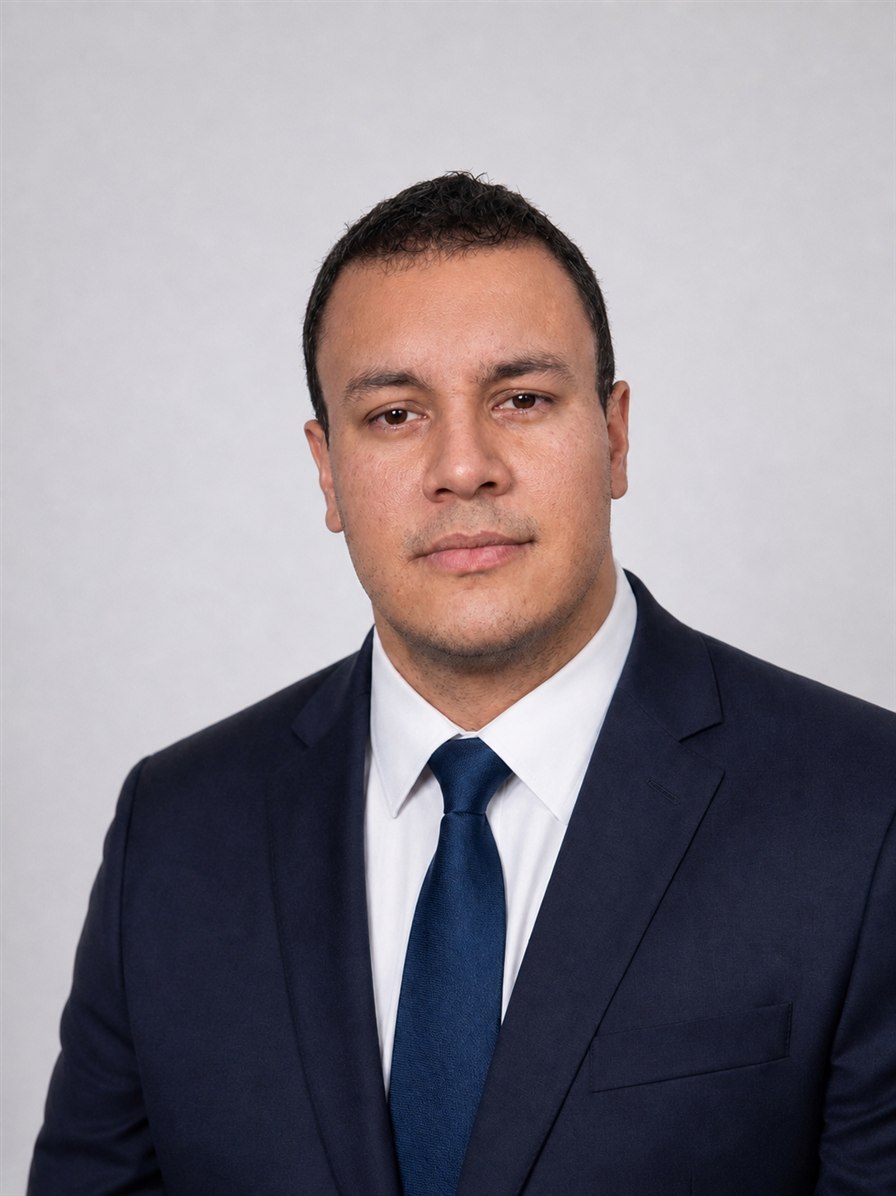
Who will assist you
A Brazilian lawyer with degrees in Law, Accounting and Economics, postgraduate studies in Business Law and specialist studies in Employment Law and Procedure.
This multidisciplinary background supports a combined assessment of contracts, payroll, business organisation and the economic impact of employment decisions.
Frequently asked questions
General answers to guide initial contact. Definitive classification depends on the records and facts.
No. No service can prevent a worker from accessing the courts. Preventive work aims to organise decisions, records and working practices, reducing inconsistencies and improving the ability to respond.
No. Those teams have their own responsibilities. Legal advice complements their work, helping interpret rules, assess risks and align records with actual operations.
They may do. Scope should be proportionate to headcount, sector, hours, pay arrangements and use of contractors. Every business does not need the same package of measures.
No. General information is enough initially. Once the objective is understood, a limited, appropriate list of documents is recommended.
No. Commission forms part of salary. Prêmios have specific rules under Article 457 of the CLT, requiring assessment of their criteria and how payment works in practice.
Not automatically. Lei nº 6.019/1974 provides for the commissioning company's subsidiary liability for employment obligations relating to the service period, as well as safety and hygiene rules in the statutory circumstances.
Yes. The engagement can be limited to a procedure, a restructuring phase or a specific case, according to the company's needs.
No. Article 507-B of the CLT requires trade union participation and limits the discharge effect to the payments expressly itemised in the instrument.
No. The procedure requires a joint petition, separate lawyers and judicial scrutiny. Approval and the scope of the discharge depend on the case, the settlement's terms and the decision.
Yes. The firm provides online services throughout Brazil. Each engagement considers jurisdiction, the place of work, collective agreements and any need for in-person support.
Yes. The firm can assess employment claims, inspections and administrative proceedings, subject to time limits, any existing representation and the viability of the case.
As a general rule, the Brazilian Constitution covers claims for the previous five years, provided proceedings are brought within two years after the employment contract ends. Specific situations require separate assessment.
Useful navigation
WhatsApp messages can be received in different languages. Telephone calls are available in Portuguese, English and Spanish.
Business enquiries
Provide only the general subject. The form prepares a WhatsApp message for you to decide whether to send.
Legislation and reference