Minimum rural retirement age
As a rule, 55 for women and 60 for men, if rural work is proved for the applicable period.
Brazilian social security law · Minas Gerais
Sharecroppers, rural partners, tenant farmers, borrowers of land for use, possessors and people working on another person's property may have rural work periods recognised. Correct classification and evidence of actual work are the starting point.
Informational content about Brazilian law. Classification and benefit entitlement depend on each person's category, periods and evidence.
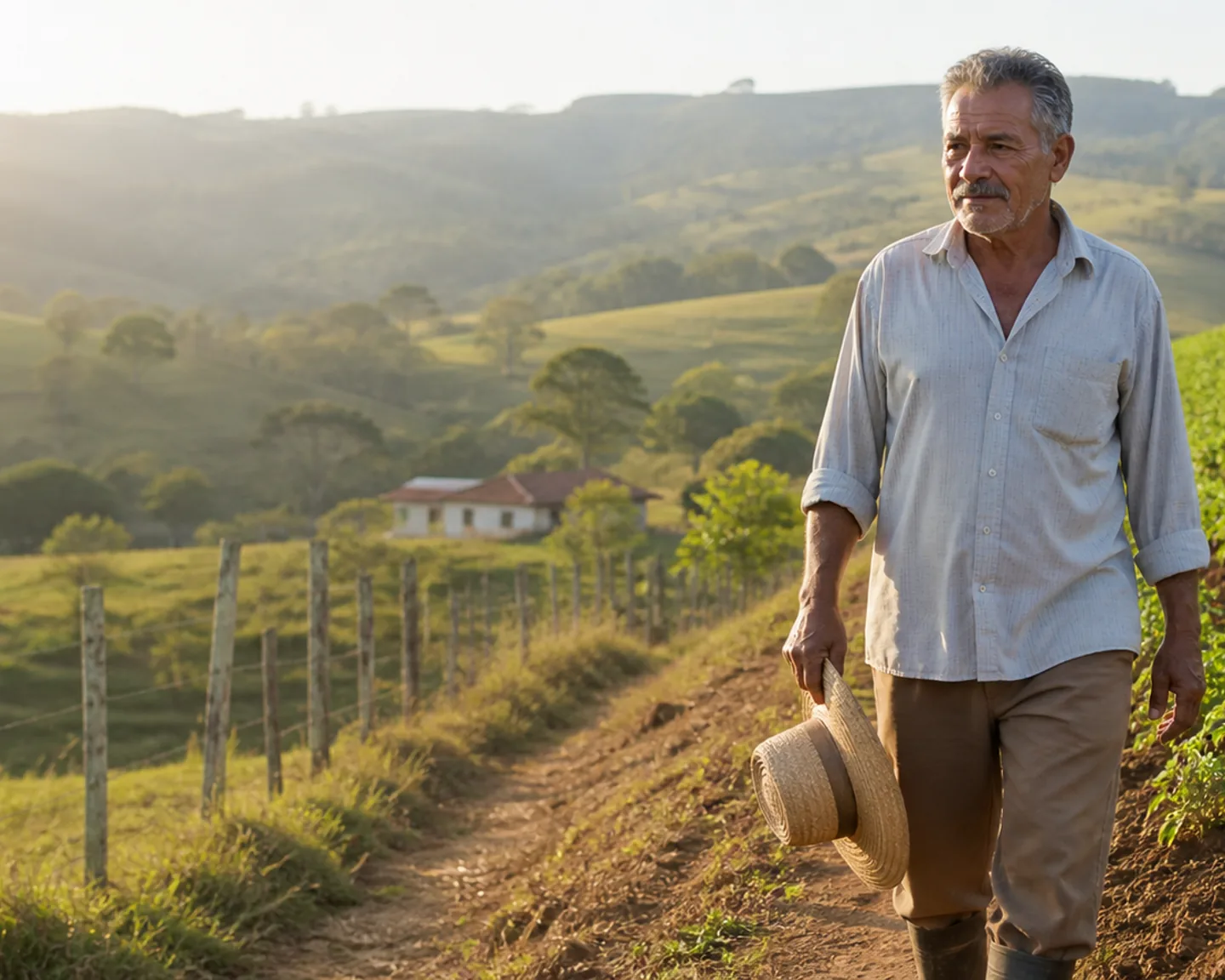
Ownership not required
The law recognises different forms of land use and work
180 months
Generally required period, subject to the rules of the case
Assistance in MG
OAB/MG nº 230.667 and online legal assistance
Key point
Ownership is only one possible relationship with land. Possession, rural partnership, sharecropping, loan for use and tenancy may feature in the rural work history.
Law No 8.213/1991 describes the segurado especial category by the person's activity and working arrangements, including various forms of occupation and rural production. This avoids confusing a lack of title deeds with a lack of work.
The challenge usually concerns evidence: identifying who provided the land, what was produced, how income was shared, which family members took part and what documents were generated during the period.
Rural employees, daily workers and boias-frias may have Brazilian social security protection, but should not automatically be classified as segurados especiais. The actual work arrangements and available records determine classification and the evidence strategy.
Who may need an assessment
The everyday name for the work does not replace checking the Brazilian social security category and how the work was performed.
General requirements
Rural retirement benefits based on age have their own criteria. A conclusion requires a work history timeline and a check of any urban periods or changes of category.
As a rule, 55 for women and 60 for men, if rural work is proved for the applicable period.
Generally, 180 months of activity are required, with attention to when the requirements were met.
Family subsistence work, employment, rural partnership and occasional work have different documents and consequences.
CNIS, urban periods, benefits, employment relationships and contributions must be compared with the rural work account.
A timeline helps identify what can be used, what needs supplementing and which gaps require care.
Organising evidence
You do not need everything at the first contact. Each document's usefulness depends on the name, date, content and connection with rural work.
Agreements, contemporaneous declarations, produce-sharing receipts, loans for use, leases and property documents.
Invoices, producer invoice books, purchases of inputs, sales of animals or harvests, cooperative records and technical assistance.
Certificates, electoral registration, enlistment, employment record books and other documents indicating a rural occupation or address.
Documents in a spouse's or partner's name may help where contemporaneous and consistent with the group's activity.
Children's schools, health centres, associations, unions, churches and local registrations may provide context for the period.
The self-declaration, social security record, application, requests for information and decision must be reviewed together.
Transparency
Brazilian social security rules have exceptions and differences between categories. Responsible advice avoids automatic answers.
Legal assistance
The approach is determined by the Brazilian social security category, documents and periods presented.
Reconstructing how work was organised, who provided the land and how production or payment operated.
Sorting documents by year, named holder and the fact each item helps demonstrate.
Identifying the possible benefit and the administrative or court route appropriate to the case's stage.

Who will assist you
Lawyer with postgraduate specialisations in Brazilian social security law and Brazilian employment law and procedure, as well as education in law, accounting and economics.
The responsible lawyer holds OAB/MG nº 230.667 and a postgraduate specialisation in Brazilian social security law. The assessment considers the rural category, CNIS (Brazil's social information register), family documents and urban periods together, without assuming success.
Responsible lawyer: Alex Rodrigues Alves
OAB/DF nº 46.260 | OAB/GO nº 64.591 | OAB/SP nº 508.634 | OAB/MG nº 230.667 | OAB/ES nº 44.334 | OAB/PR nº 136.193
Frequently asked questions
The answers are general. A conclusion depends on the documents and circumstances of the rural work.
No. Law No 8.213/1991 covers different forms of rural activity, including producers, usufruct holders, possessors, land-reform settlers, rural partners, sharecroppers, borrowers of land for use and tenant farmers, provided the category's requirements are met. Employees and occasional workers have their own classification.
Recognition may be possible, but the relationship with the land, activity and period must be demonstrated. A written agreement helps, although other contemporaneous documents may also form part of the evidence.
This should not be assumed. The actual hiring arrangements, frequency, subordination and who organised the work determine the category and appropriate evidence.
It may be relevant. TNU Theme 327 specifically concerns documents in a spouse's or partner's name identifying them as a rural employee. Other documents and family relationships must be examined within the overall evidence.
Not necessarily, but the duration, timing and category of those periods may change the benefit available. The timeline must be assessed before applying.
The decision may be reviewed administratively or in court where there are grounds and evidence. The approach depends on the reason for refusal, time limits and what can still be demonstrated.
WhatsApp messages can be received in different languages. Telephone calls are available in Portuguese, English and Spanish.
Initial contact
Give your age, municipalities, how you worked the land, approximate period, name of the owner or rural partner, available documents and any INSS application.
Do not send complete personal documents, bank details or passwords in the initial form. If the assessment proceeds, the firm will indicate an appropriate channel.
Online legal assistance throughout Minas Gerais and in-person appointments in Ceilândia Sul, Brasília/DF.
Monday to Friday, 8 am to 5 pm.
Official sources and related pages
Legislation and institutional guidance