Skip to content

Family Law · Information and advice

Child custody is about sharing responsibilities

Shared custody, sole custody and contact arrangements concern different things. Separating these three issues helps avoid fragile agreements and conflicts that could be resolved through better organisation.

Advice for fathers, mothers and carers, both where there is agreement and where a dispute has already arisen. No outcome is promised: the conclusion depends on the facts, evidence and best interests of the child or adolescent.

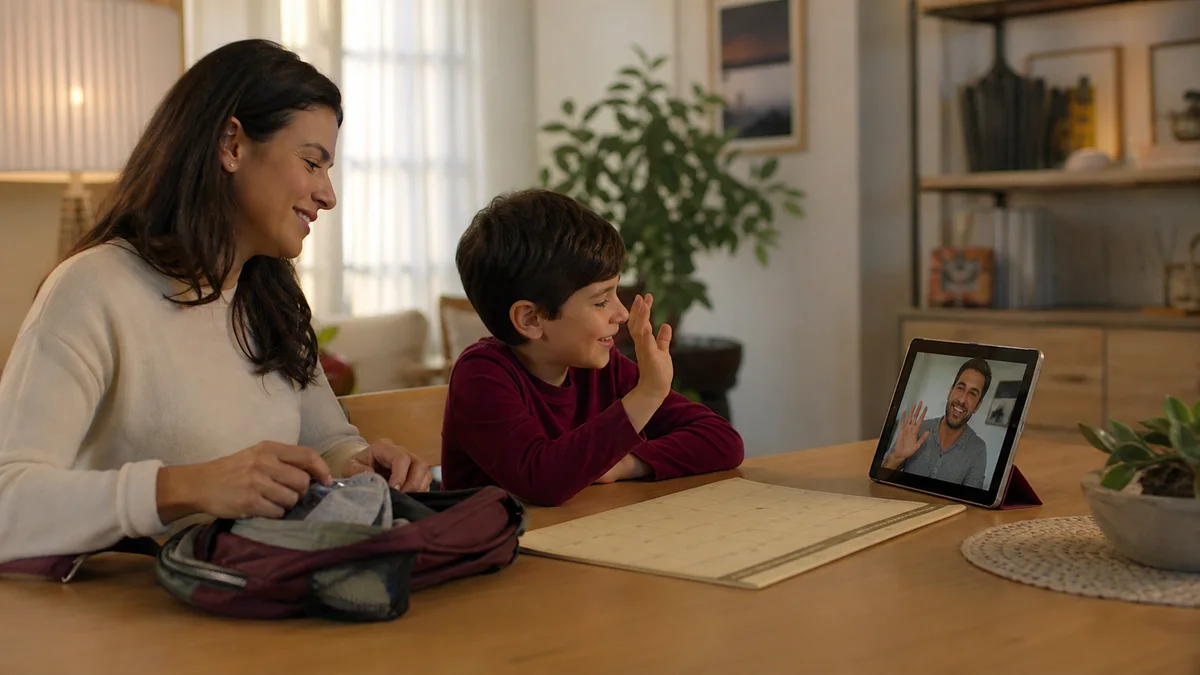
Parents or carers and a child organising a weekly family contact calendar together

Custody and contact

Determination, regulation, revision and non-compliance

Agreement where possible

Court-approved agreements and court action where necessary

Ceilândia and throughout Brazil

In-person and online advice

What the law provides

Three possible arrangements with very different effects

Custody determines responsibility for decisions and daily life. It differs from contact time, which is organised separately and may be adjusted without changing the chosen custody arrangement.

Shared custody

Joint responsibility for decisions concerning the child's life.

The father and mother remain responsible for important choices — school, health, routines and permissions — even when living in separate homes. The Brazilian Civil Code requires contact time to be divided in a balanced way, taking account of the actual circumstances and the children's interests.

Sole custody

Custody rests with one parent or carer, without excluding the other.

The parent without custody retains parental authority, maintains contact and must oversee the child's interests. The law entitles either parent to request information and an account of matters concerning health, education and development.

Custody awarded to another person

An exceptional solution when neither parent is able to provide custody.

If the judge finds that the child should not remain with either parent, custody may be awarded to a suitable person, giving preference to the degree of kinship and the relationships of affinity and affection.

Comparison

Where the arrangements really differ

The practical difference concerns who decides, where the child lives and how time is organised. Confusing these aspects can lead to unclear agreements and further disputes.

Shared

Who decides
Both take part in important decisions.
Where the child lives
There may be a main town and a main home.
Contact arrangements
Time is divided in a balanced way, without requiring exact halves.
Legal provision
Provided for in the Civil Code as the applicable arrangement when both parents are fit to exercise parental authority.

Sole

Who decides
One parent or carer manages daily life; the other oversees it and may request information.
Where the child lives
Usually in the home of the person with custody.
Contact arrangements
Arranged through a court-approved agreement or a court decision.
Legal provision
Provided for in the Civil Code, including when one parent states that they do not want custody.

Alternating

Who decides
Each parent or carer makes decisions alone during their own period.
Where the child lives
The child alternates between two homes.
Contact arrangements
Fixed blocks of time, such as weeks or fortnights.
Legal provision
Not one of the arrangements described in the Civil Code; it occurs in practice and requires careful assessment of the child's routine.

Are the agreed contact arrangements being followed?

What has already been formalised, the history of recent months and the available records guide the next steps.

Explain my situation

Contact plan

A vague calendar can increase friction

Many conflicts arise from general agreements rather than bad faith. The more accurately the document describes the actual routine, the less room there is for interpretation at tense moments.

Predictability protects the child first, by making it clear when they will see each parent or carer. It then protects the adults by reducing the need to negotiate everything again each week.

  • Weekday times compatible with school and the child's sleep
  • Weekends, with clear arrangements for overnight stays
  • School holidays in July and at the end of the year
  • Long holiday weekends and breaks
  • Special occasions, the child's birthday, Mother's Day and Father's Day
  • Who drops off and collects the child during each period, and at which address
  • Contact by phone, message or video call on days without in-person contact
  • Advance notice of travel and permission to leave the town or country
  • The channel and method for communication between parents or carers about school, health and unexpected events

Limits and exceptions

Situations that change the approach

Shared custody applies when both parents are fit to exercise parental authority, but the law and practice recognise circumstances requiring another solution or different contact arrangements.

Signs of domestic or family violence

Law No. 14.713/2023 introduced the likelihood of a risk of domestic or family violence as a bar to shared custody. Before the mediation and conciliation hearing, the judge must also ask the parties and the Ministério Público whether that risk exists and allow five days for relevant evidence or indications to be presented.

Babies and very young children

The law sets no minimum age for shared custody. Contact arrangements must take account of breastfeeding, sleep, health, care routines, established bonds and each parent's or carer's circumstances in the individual case, without an automatic formula based solely on age.

Parents or carers in different towns or countries

Distance alone does not rule out shared custody, because the arrangement concerns responsibility rather than simultaneous physical custody. In these cases, the child's main town of residence, longer holiday periods, travel costs and remote contact become particularly relevant.

Change of address or municipality

A permanent move to another municipality requires both parents' consent in the exercise of parental authority. An unjustified move that makes contact difficult may be examined as obstruction, and a change of residence is irrelevant to determining jurisdiction unless based on agreement or a court decision.

Grandparents and other emotional bonds

Visiting rights extend to either grandparent at the judge's discretion and subject to the child's or adolescent's interests. Other important bonds may be considered, always on the basis of the actual relationship rather than an automatic presumption.

The child's or adolescent's views

The child's or adolescent's views may be considered in a way appropriate to their age, maturity and protection, without placing the burden of the decision on them. In cases of parental alienation, where testimony or a hearing is necessary, Law No. 12.318/2010 expressly requires compliance with Law No. 13.431/2017.

When arrangements are not followed

The law provides graduated measures rather than a single penalty

Before taking action, it is necessary to check what has been formalised and what can be proved. The choice of measure depends on the seriousness of the situation and what needs to be restored.

Reduction of powers

An unauthorised change or unjustified failure to comply with a sole or shared custody provision may lead to a reduction in the powers granted to the person responsible.

Extended contact and a fine

Where acts obstructing contact are established, the judge may extend contact in favour of the excluded person and impose a fine, together or separately, depending on the seriousness of the case.

Psychological or biopsychosocial support

Support may be ordered and, under Law No. 14.340/2022, now requires periodic assessments with an initial and a final report.

Change of custody

The judge may order a change to shared custody or transfer custody to the other parent, as well as determine the child's or adolescent's residence as an interim measure.

Reversing drop-off and collection duties

Where an abusive change of address or obstruction of contact is established, the judge may reverse the duty to take the child to, or collect them from, the other parent's home.

Information withheld by a school or clinic

A public or private establishment must provide either parent with information about the child, subject to a daily fine of R$ 200,00 to R$ 500,00 for failing to comply with the request.

Two precautions are often decisive. First, not every disagreement should be treated as parental alienation: Law No. 12.318/2010 describes specific conduct, including false allegations against the other parent. Second, the suspension of parental authority formerly provided for in art. 6º, VII, was repealed by Law No. 14.340/2022, although it still appears in many outdated texts online.

Recent developments

Ongoing contact and emotional support in the Child and Adolescent Statute

Law No. 15.240/2025 amended specific provisions of the ECA that directly concern contact disputes.

Art. 22 now expressly includes ongoing contact and emotional support among parents' duties, alongside support, custody and education. Art. 4º now describes emotional support, referring to ongoing contact or regular visits that allow parents to follow the developing person's upbringing.

The sole paragraph of art. 5º now treats an act or omission infringing a child's or adolescent's fundamental right, including emotional neglect, as unlawful conduct subject to compensation. Application depends on evidence and individual assessment; it does not turn every instance of distance into automatic compensation.

Preparation

Useful documents for an initial assessment

Not all will be needed. The aim is to organise what already exists before requesting sensitive information, especially information concerning the child.

  • The child's or adolescent's birth certificate
  • Parents' or carers' identity documents
  • Any previous order, judgment or agreement on custody, contact or maintenance
  • Proof of each parent's or carer's address
  • Information on school, school hours, activities and care routines
  • An objective record of contact periods that took place and those that did not
  • Relevant messages and arrangements preserved in their original, unedited format
  • Health documents only where genuinely necessary for the dispute
  • School reports where there is a concrete impact on the child's routine

Working method

How the initial assessment works

The sequence matters. Separating the aim, history and documents avoids unnecessary exposure of the child and reduces time spent on side issues.

  1. 01

    Identify the separate issues in dispute

    Custody, contact, maintenance and residence are different claims requiring different evidence. Treating everything as one conflict often prolongs proceedings and places unnecessary strain on the family.

  2. 02

    Check what has already been formalised

    Court-approved agreements, interim orders, dates and earlier proceedings change the strategy. Many cases require enforcement or adjustment of existing arrangements rather than new proceedings.

  3. 03

    Organise the facts and documents

    Routines, journeys and the history of contact must be presented in a verifiable way, with particular care for the child's privacy and exposure.

  4. 04

    Assess the appropriate route

    Negotiation followed by court approval, custody proceedings, contact arrangements or their revision, urgent interim relief and measures against obstruction are different routes, chosen according to the aim and the available evidence.

  5. 05

    Follow the mediation and conciliation stage

    In family proceedings, the Code of Civil Procedure prioritises agreement and provides for a mediation and conciliation hearing. The Ministério Público intervenes where a child's or adolescent's interests are involved, and the judge may draw on an interdisciplinary team.

Alex Rodrigues Alves, the Brazilian lawyer responsible for assistance

Responsible assistance

Alex Rodrigues Alves

Brazilian lawyer with a law degree and postgraduate qualifications in Public Law, Constitutional Law and Out-of-Court Legal Practice.

The Constitutional Law qualification directly relates to the duty of comprehensive protection in art. 227 of the Constitution, the guiding principle for custody and contact decisions. Training in out-of-court legal practice supports the drafting of clear agreements where a consensual solution is possible. The responsible lawyer handles consultations, with a previously defined scope and care for children's and adolescents' data.

Lawyer responsible: Alex Rodrigues Alves
OAB/DF nº 46.260 | OAB/GO nº 64.591 | OAB/SP nº 508.634 | OAB/MG nº 230.667 | OAB/ES nº 44.334 | OAB/PR nº 136.193

Frequently asked questions

Questions about custody and contact

General answers to guide the first contact. The conclusion depends on the facts, documents and decisions already in place in the case.

Does shared custody mean the child spends half their time in each home?

No. The Civil Code requires contact time in shared custody to be divided in a balanced way, always taking account of the actual circumstances and the children's interests. The Superior Tribunal de Justiça has held that the arrangement does not require joint physical custody or equal division of time. There may be a main town and home around which contact is organised.

Can shared custody be ordered even if the parents do not agree?

Yes. Where there is no agreement and both parents are fit to exercise parental authority, shared custody is the applicable arrangement. The statutory exceptions are a parent's statement to the judge that they do not want custody and evidence indicating the likelihood of a risk of domestic or family violence, introduced by Law No. 14.713/2023.

Does shared custody end child maintenance?

Not automatically. Custody and maintenance are separate matters. Both parents retain the duty to support the child, and the amount is determined by the child's needs and each parent's means, also taking account of who pays each expense directly. Questions about amounts are addressed on the maintenance page.

Is alternating custody the same as shared custody?

No. The Civil Code provides for sole and shared custody. So-called alternating custody, where each parent or carer exercises custody exclusively during their own period, is not among the arrangements described in the law and occurs only in practice. It requires careful assessment because frequent changes of residence may affect the child's school routine and stability.

Is “visiting” or “ongoing contact” the better term?

Ongoing contact better reflects the Brazilian term convivência, as it describes a continuing relationship rather than an occasional meeting. The Civil Code still uses the word visita in some provisions, and Law No. 15.240/2025 amended the Child and Adolescent Statute to expressly include ongoing contact among parents' duties.

Can the parent with sole custody decide everything alone?

No. Sole custody requires the parent without custody to oversee the children's interests, and either parent may request information or an account of matters affecting physical health, psychological health and education. Both retain parental authority regardless of their marital situation.

Can a school or clinic withhold information from the parent without custody?

No. Any public or private establishment must provide either parent with information about their children, subject to a daily fine of R$ 200,00 to R$ 500,00 for failure to comply, under art. 1.584, § 6º, of the Civil Code.

Can the child choose who to live with?

The child's or adolescent's views may be considered according to age and maturity, but they are not the only factor and do not transfer responsibility for the decision to the child. Participation must protect their integrity and avoid inappropriate exposure. In parental alienation cases, where testimony or a hearing is necessary, Law No. 12.318/2010 requires compliance with Law No. 13.431/2017.

Can I move to another town with my child?

A permanent move to another municipality requires consent in the exercise of parental authority, and the main town of residence must be the one that best serves the children's interests. An unjustified move that makes contact difficult may be examined as obstruction, and a change of residence does not affect jurisdiction unless based on agreement or a court decision.

Do grandparents have a right to contact with their grandchildren?

Visiting rights extend to either grandparent at the judge's discretion and subject to the child's or adolescent's interests, under the sole paragraph of art. 1.589 of the Civil Code, introduced by Law No. 12.398/2011. This is not an automatic right; the actual bond must be assessed.

What can happen if someone fails to follow contact arrangements?

An unauthorised change or unjustified failure to comply may lead to reduced powers. Where acts obstructing contact are established, Law No. 12.318/2010 allows the judge, among other measures, to issue a warning, extend contact in favour of the excluded person, impose a fine, order psychological or biopsychosocial support, change or transfer custody and determine residence as an interim measure. The provision for suspension of parental authority formerly in item VII was repealed by Law No. 14.340/2022.

Is every difficulty with contact parental alienation?

No. The law describes specific conduct, such as obstructing contact, withholding important information, making a false allegation against the other parent and moving without justification to make contact difficult. Occasional disagreements, scheduling problems or conflicts between adults do not, by themselves, amount to parental alienation. Evidence is required, and an unfounded allegation also has consequences.

Can a custody agreement be made at a notarial office?

Custody, contact and maintenance for a minor child or a child lacking legal capacity require a court determination, even where there is agreement. Since CNJ Resolution No. 571/2024, a public divorce deed may be drawn up even where there are minor children or children lacking legal capacity, provided all these matters have already been resolved in court and this is recorded in the deed. The notarial office therefore does not replace the judicial stage concerning the children.

Can emotional neglect give rise to liability?

Law No. 15.240/2025 amended the Child and Adolescent Statute to classify emotional neglect as unlawful conduct subject to compensation and to describe what emotional support means. Its application depends on evidence and individual assessment and does not replace the discussion of custody and contact.

Where are custody proceedings heard, and can consultations take place online?

As a rule, the dispute is heard in the forum connected with the residence of the child and the person with custody, as reflected in STJ Súmula 383. Consultations may take place online for people throughout Brazil and in person in Ceilândia Sul, Brasília/DF, subject to availability, without changing the court's jurisdiction.


Related content

WhatsApp messages can be received in different languages. Telephone calls are available in Portuguese, English and Spanish.

Initial contact

Describe the current stage of the case

State whether there is already a decision or agreement, the current custody arrangement, how contact works in practice and your main need.

This form prepares a message in your browser. Avoid health information, information about children and details of legal proceedings. See the Privacy Policy.

In this first contact, do not provide the child's or adolescent's name, school, address, health diagnosis or other identifying information. If the assessment proceeds, the firm will specify the appropriate channel for the necessary documents.

Prefer to speak directly?

In-person advice in Ceilândia Sul, Brasília/DF, and online for people throughout Brazil.

QNM 01 Conjunto H, Lote 40, Sala 102, Ceilândia Sul, Brasília/DF, CEP 72215-018
Monday to Friday, 8 am to 5 pm.

WhatsApp